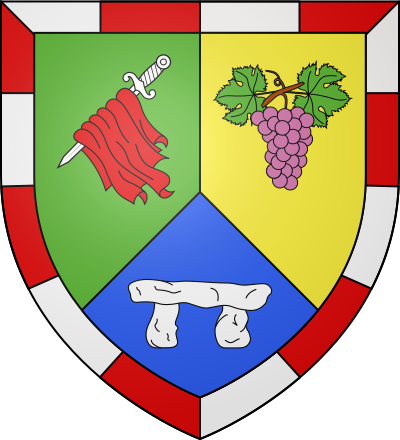
 Le Liège
Informations
| Code INSEE | 37127 |
| Code Postal | 37460 |
| Gentilé | Liégeois |

Le Liège (Indre-et-Loir) Eglise Saint-Martin. L'église pourrait dater du 12ème siècle. La nef est la partie la plus ancienne. Les fenêtres ont toutes été déplacées et refaites au 19ème siècle. Le clocher et l'abside à trois pans sont du 15ème siècle. La chapelle latérale nord (chapelle de la Vierge), qui s'aligne sur le clocher, est probablement plus tardive. St. Martin's Church. The church could date from 12th century. The nave is the oldest part. The windows have all been moved and rebuilt in the 19th century. The bell tower and three-sided apse are 15th century. The north side chapel (Chapel of the Virgin), which aligns the tower, probably later. par Thesupermat2 (CC BY 2.0)

Le Liège (Indre-et-Loir) Eglise Saint-Martin. L'église pourrait dater du 12ème siècle. La nef est la partie la plus ancienne. Les fenêtres ont toutes été déplacées et refaites au 19ème siècle. La chapelle latérale sud (chapelle Saint-Joseph) date du 16ème siècle. St. Martin's Church. The church could date from 12th century. The nave is the oldest part. The windows have all been moved and rebuilt in the 19th century. The south side chapel (St. Joseph Chapel) dates from the 16th century. par Thesupermat2 (CC BY 2.0)

Le Liège (Indre-et-Loir) Eglise Saint-Martin. Bénitier composé d'un véritable tridacne géant. Ce gros coquillage est en voie de disparition et fait l'objet d'une protection internationale. Le nom de "bénitier" donné au coquillage vient de sont utilisation fréquente dans les églises. St. Martin's Church. Stoup compound of a true giant clam. This large shell is endangered and is the subject of international protection par Thesupermat2 (CC BY 2.0)

Le Liège (Indre-et-Loir) Eglise Saint-Martin. Au dessus de la porte, le tableau représente une Nativité (18ème-19ème siècle). Les villageaois y sont représentés avec leurs outils de travail. St. Martin's Church. Above the door, the painting represents a Nativity (18th-19th century). The villageaois are represented with their tools. par Thesupermat2 (CC BY 2.0)


Le Liège (Indre-et-Loir) Eglise Saint-Martin. L'église pourrait dater du 12ème siècle. La nef est la partie la plus ancienne. Le Christ en Croix du 15ème siècle est en chêne. St. Martin's Church. The church could date from 12th century. The nave is the oldest part. Christ on the Cross, 15th century, oak. par Thesupermat2 (CC BY 2.0)

par Touffi (CC BY-SA 2.5)

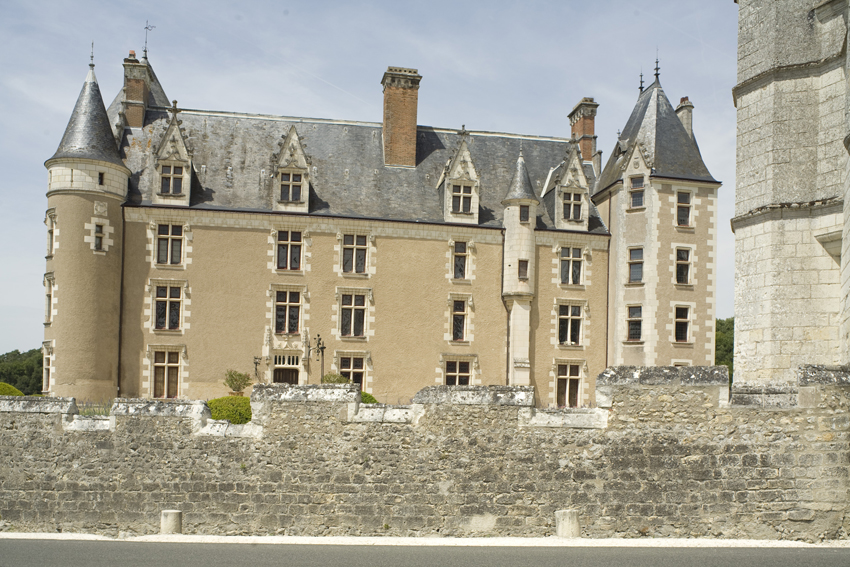
- Addresse : 4 rue de la Mairie
37460 Le Liège
- Email : mairie@le-liege.com
- Téléphone : 02 47 59 74 38
- Fax :
- Horaires :
- Le Mardi : 10:00:00 - 12:00:00 (Accueil possible sur rendez-vous en dehors de ces horaires.)
- Du Jeudi au Samedi : 10:00:00 - 12:00:00 (Accueil possible sur rendez-vous en dehors de ces horaires.)

_(15708149265).jpg)
_(15522957007).jpg)
_(15708136555).jpg)
_(15522260559).jpg)
_(15708125985).jpg)
_(15684419476).jpg)
_(15522716358).jpg)


