 Chauvigny-du-Perche
Informations
| Code INSEE | 41048 |
| Code Postal | 41270 |

SNCF standard 241P Class 4-8-2 No.241P17 during the AJECTA Festival at Romilly having arrived on a special from Longueville, 8 May 2023. When the SNCF came to decide on its post war requirements for the former PLM Paris – Marseilles mainline, rather than design a class from a clean sheet, they decided to improve PLM’s 241C Class prototype of 1930 designed and built by Schneider. This was a curious choice since No.241C1 was notorious for having weak frames (necessary to keep its weight and axle load down) with its concomitant problems. It can only be explained by the fact that the SNCF’s senior management were former PLM men who wanted to develop their ‘own’ design rather than start anew. The resultant 241P Class were certainly an advance over No.241C1, having stronger frames, boiler improvements and a tender with automatic stoker. However, one legacy of the 1930 design was the low running plate with wheel splashers, decidedly old fashioned by 1948. The 241P’s were immensely powerful, free-running and very efficient. However, their frames were still not strong enough to cope with the power of the 241P’s - they could easily develop 4,000 dbhp. Apart from requiring frequent patching, the frames tended to flex leading to hot axle boxes and, straining the long boiler, leaking boiler tubes. Schneider built 35 241P’s in 1948-52 and, despite being masters of their duties, a combination of displacement by electrification and their need for frequent maintenance led to their premature withdrawal in 1965-73, although their last regular work had been in 1970. Nonetheless, a very impressive design. par Oxyman (CC BY-SA 2.0)

SNCF standard 241P Class 4-8-2 No.241P17 during the AJECTA Festival at Romilly having arrived on a special from Longueville, 8 May 2023. When the SNCF came to decide on its post war requirements for the former PLM Paris – Marseilles mainline, rather than design a class from a clean sheet, they decided to improve PLM’s 241C Class prototype of 1930 designed and built by Schneider. This was a curious choice since No.241C1 was notorious for having weak frames (necessary to keep its weight and axle load down) with its concomitant problems. It can only be explained by the fact that the SNCF’s senior management were former PLM men who wanted to develop their ‘own’ design rather than start anew. The resultant 241P Class were certainly an advance over No.241C1, having stronger frames, boiler improvements and a tender with automatic stoker. However, one legacy of the 1930 design was the low running plate with wheel splashers, decidedly old fashioned by 1948. The 241P’s were immensely powerful, free-running and very efficient. However, their frames were still not strong enough to cope with the power of the 241P’s - they could easily develop 4,000 dbhp. Apart from requiring frequent patching, the frames tended to flex leading to hot axle boxes and, straining the long boiler, leaking boiler tubes. Schneider built 35 241P’s in 1948-52 and, despite being masters of their duties, a combination of displacement by electrification and their need for frequent maintenance led to their premature withdrawal in 1965-73, although their last regular work had been in 1970. Nonetheless, a very impressive design. par Oxyman (CC BY-SA 2.0)

SNCF standard 241P Class 4-8-2 No.241P17 during the AJECTA Festival at Romilly having arrived on a special from Longueville, 8 May 2023. When the SNCF came to decide on its post war requirements for the former PLM Paris – Marseilles mainline, rather than design a class from a clean sheet, they decided to improve PLM’s 241C Class prototype of 1930 designed and built by Schneider. This was a curious choice since No.241C1 was notorious for having weak frames (necessary to keep its weight and axle load down) with its concomitant problems. It can only be explained by the fact that the SNCF’s senior management were former PLM men who wanted to develop their ‘own’ design rather than start anew. The resultant 241P Class were certainly an advance over No.241C1, having stronger frames, boiler improvements and a tender with automatic stoker. However, one legacy of the 1930 design was the low running plate with wheel splashers, decidedly old fashioned by 1948. The 241P’s were immensely powerful, free-running and very efficient. However, their frames were still not strong enough to cope with the power of the 241P’s - they could easily develop 4,000 dbhp. Apart from requiring frequent patching, the frames tended to flex leading to hot axle boxes and, straining the long boiler, leaking boiler tubes. Schneider built 35 241P’s in 1948-52 and, despite being masters of their duties, a combination of displacement by electrification and their need for frequent maintenance led to their premature withdrawal in 1965-73, although their last regular work had been in 1970. Nonetheless, a very impressive design. par Oxyman (CC BY-SA 2.0)

SNCF standard 241P Class 4-8-2 No.241P17 during the AJECTA Festival at Romilly having arrived on a special from Longueville, 8 May 2023. When the SNCF came to decide on its post war requirements for the former PLM Paris – Marseilles mainline, rather than design a class from a clean sheet, they decided to improve PLM’s 241C Class prototype of 1930 designed and built by Schneider. This was a curious choice since No.241C1 was notorious for having weak frames (necessary to keep its weight and axle load down) with its concomitant problems. It can only be explained by the fact that the SNCF’s senior management were former PLM men who wanted to develop their ‘own’ design rather than start anew. The resultant 241P Class were certainly an advance over No.241C1, having stronger frames, boiler improvements and a tender with automatic stoker. However, one legacy of the 1930 design was the low running plate with wheel splashers, decidedly old fashioned by 1948. The 241P’s were immensely powerful, free-running and very efficient. However, their frames were still not strong enough to cope with the power of the 241P’s - they could easily develop 4,000 dbhp. Apart from requiring frequent patching, the frames tended to flex leading to hot axle boxes and, straining the long boiler, leaking boiler tubes. Schneider built 35 241P’s in 1948-52 and, despite being masters of their duties, a combination of displacement by electrification and their need for frequent maintenance led to their premature withdrawal in 1965-73, although their last regular work had been in 1970. Nonetheless, a very impressive design. par Oxyman (CC BY-SA 2.0)

Numberplate of SNCF standard 241P Class 4-8-2 No.241P17 at the AJECTA Festival at Longueville Depot, 6 May 2023. When the SNCF came to decide on its post war requirements for the former PLM Paris – Marseilles mainline, rather than design a class from a clean sheet, they decided to improve PLM’s 241C Class prototype of 1930 designed and built by Schneider. This was a curious choice since No.241C1 was notorious for having weak frames (necessary to keep its weight and axle load down) with its concomitant problems. It can only be explained by the fact that the SNCF’s senior management were former PLM men who wanted to develop their ‘own’ design rather than start anew. The resultant 241P Class were certainly an advance over No.241C1, having stronger frames, boiler improvements and a tender with automatic stoker. However, one legacy of the 1930 design was the low running plate with wheel splashers, decidedly old fashioned by 1948. The 241P’s were immensely powerful, free-running and very efficient. However, their frames were still not strong enough to cope with the power of the 241P’s - they could easily develop 4,000 dbhp. Apart from requiring frequent patching, the frames tended to flex leading to hot axle boxes and, straining the long boiler, leaking boiler tubes. Schneider built 35 241P’s in 1948-52 and, despite being masters of their duties, a combination of displacement by electrification and their need for frequent maintenance led to their premature withdrawal in 1965-73, although their last regular work had been in 1970. Nonetheless, a very impressive design. par Oxyman (CC BY-SA 2.0)


La nef. par Simon de l'Ouest (CC BY-SA 4.0)
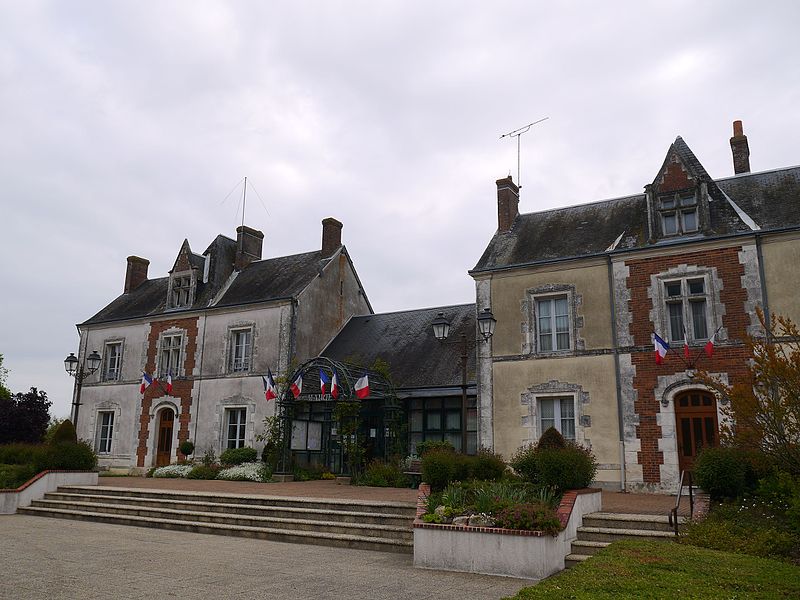
La place de la mairie. par Simon de l'Ouest (CC BY-SA 4.0)
- Addresse : 19 rue du Perche
41270 Chauvigny-du-Perche
- Email : mairiechauvigny-du-perche@wanadoo.fr
- Téléphone : 02 54 80 68 53
- Fax :
- Horaires :
- Le Lundi : 13:30:00 - 17:30:00
- Le Mercredi : 09:00:00 - 12:30:00
- Le Jeudi : 08:30:00 - 12:30:00


